We’ve all been there: you spend time crafting the perfect bruschetta, only to serve it and watch those beautiful toasted slices turn into sad, soggy bread within minutes. The tomatoes release their juices, the garlic oil seeps in, and suddenly your crispy appetizer becomes a mushy mess. But here’s the good news—with a few smart tricks, you can keep your bruschetta perfectly crisp from the first bite to the last.
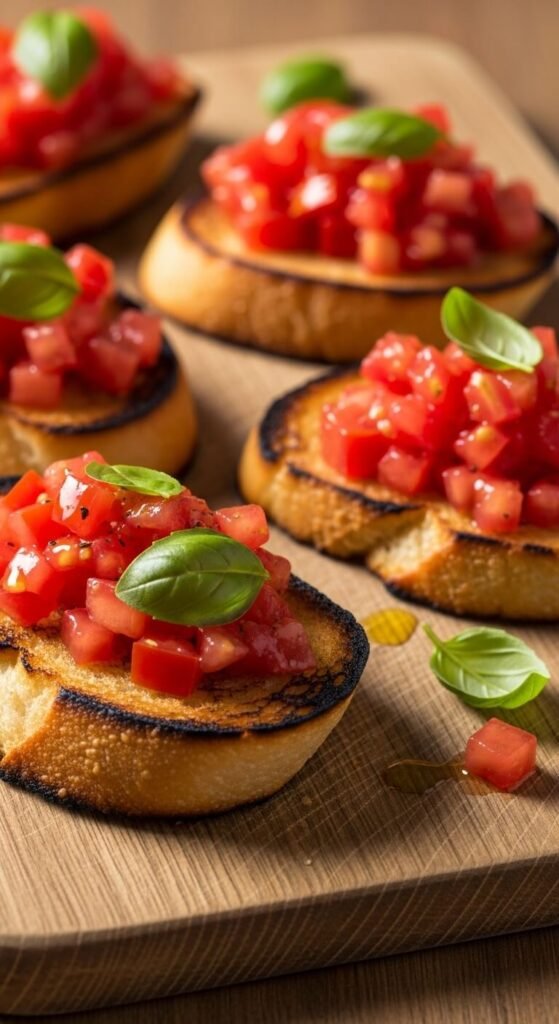
Let me walk you through exactly how to make bruschetta that stays deliciously crunchy, whether you’re serving it immediately or preparing it ahead for a party.
The Secret Starts with the Right Bread
Not all bread is created equal when it comes to bruschetta. You need a sturdy foundation that can hold up against moisture:
- Choose a crusty Italian or French baguette with a tight crumb structure
- Slice it about ½ inch thick—too thin and it’ll get soggy instantly, too thick and it won’t crisp properly
- Day-old bread actually works better than fresh because it has less moisture
The key is finding bread that’s dense enough to create a barrier against the toppings but still has that satisfying crunch when toasted.
[Image Prompt] Diagonal slices of rustic baguette bread arranged on a cutting board, showing the perfect ½ inch thickness and golden-brown crusted exterior.
Toast It Right (This Is Where Most People Go Wrong)
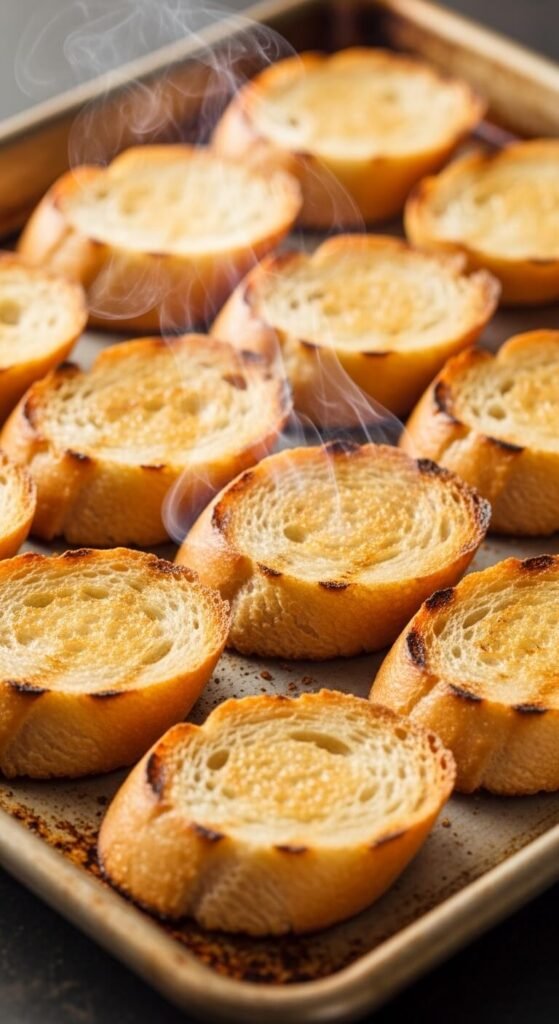
Here’s the game-changer: you need to toast your bread until it’s actually crispy, not just warm. Most people under-toast their bruschetta, which is why it gets soggy so fast.
My foolproof toasting method:
- Brush both sides of each bread slice lightly with olive oil
- Place on a baking sheet and bake at 400°F for about 5-7 minutes
- Flip and toast the other side for another 3-5 minutes until golden brown
- The bread should be crispy all the way through, not just on the surface
Pro tip: You can also grill the bread for gorgeous char marks and extra flavor. Just watch it carefully—it goes from perfect to burnt in seconds!
Prepare Your Tomatoes Like a Pro
This is the most crucial step for preventing sogginess. Tomatoes are mostly water, so you need to remove excess moisture before they ever touch your bread.
Here’s what to do:
- Dice ripe Roma tomatoes (they’re meatier and less watery than other varieties)
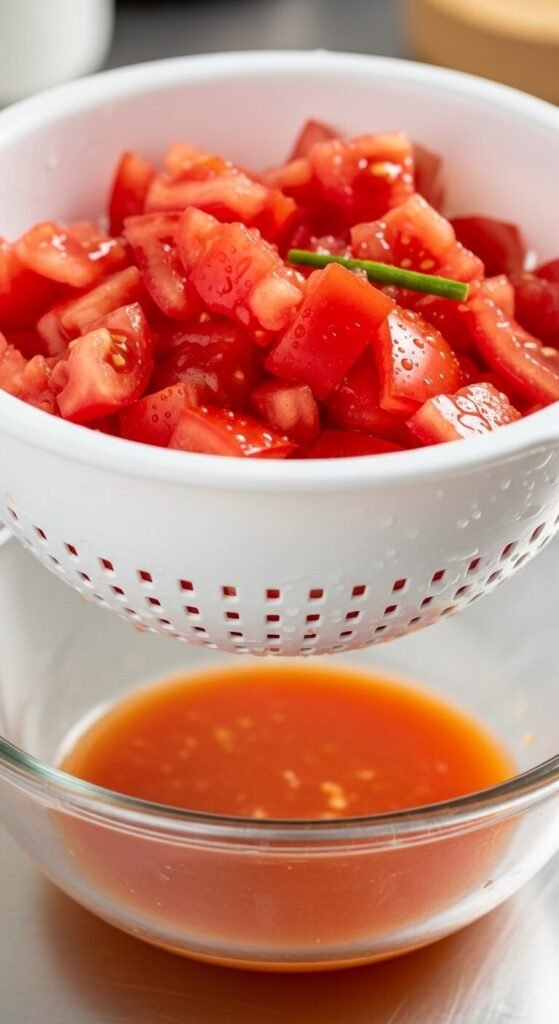
- Place the diced tomatoes in a colander or fine-mesh strainer
- Sprinkle with a pinch of salt and let them drain for 15-20 minutes
- Gently press with a paper towel to remove even more liquid
The salt draws out moisture, and that draining time makes all the difference. You’ll be amazed at how much liquid collects in the bowl underneath.
Additional moisture-fighting tips:
- Remove the seeds and gel from the tomatoes before dicing
- Pat the tomatoes dry one more time right before assembling
- Mix the tomatoes with olive oil, garlic, and basil in a separate bowl, not directly on the bread
The Garlic Rub Technique
Instead of adding minced garlic to your topping mixture (which adds more moisture), use this traditional Italian method:
- Peel a fresh garlic clove
- While the bread is still warm from toasting, rub the garlic directly on the surface
- The heat releases the garlic’s oils and flavor without adding wetness
This gives you that perfect garlic flavor without compromising texture. One clove can flavor about 4-5 slices, so you don’t need much.
Assemble at the Last Possible Moment
This might be the most important tip of all: never top your bruschetta more than 5-10 minutes before serving.
If you’re hosting a party:
- Keep the toasted bread and tomato mixture separate until guests arrive
- Let people top their own bruschetta, or assemble them as you’re walking out with the platter
- Store leftover topping and bread separately—never together
The moment that juicy tomato mixture hits the bread, the countdown begins. The longer they sit together, the soggier your bruschetta becomes.

Bonus Tips for Extra-Crispy Results
Want to take your bruschetta to the next level? Try these tricks:
- Add a protective layer: Brush the toasted bread with a thin layer of olive oil or even a smear of goat cheese before adding tomatoes. This creates a moisture barrier.
- Serve on a wire rack: Instead of a solid plate, use a wire cooling rack so air can circulate underneath and prevent condensation.
- Keep it warm: If serving at a party, place your serving platter over a warming tray to help evaporate any moisture that develops.
The Bottom Line
Making bruschetta that stays crispy isn’t complicated—it just requires understanding how moisture works and taking a few preventive steps. Toast your bread thoroughly, drain your tomatoes well, and assemble at the last minute. These three simple rules will transform your bruschetta from soggy disappointment to crispy perfection every single time.
Save this recipe for your next gathering! Your guests will be asking for your secret, and now you’ll know exactly what to tell them. Happy cooking! 🍅✨