We’ve all been there: you’re assembling beautiful Caprese skewers for your party, and halfway through, those slippery cherry tomatoes start sliding down like they’re on a waterslide. One minute you have Instagram-worthy appetizers, the next you’re staring at a deconstructed mess on your serving platter. But what if I told you there’s a better way?
The secret to perfect, slide-proof Caprese skewers isn’t some fancy culinary trick—it’s all about technique, the right ingredients, and a few game-changing hacks that’ll keep everything exactly where it belongs.
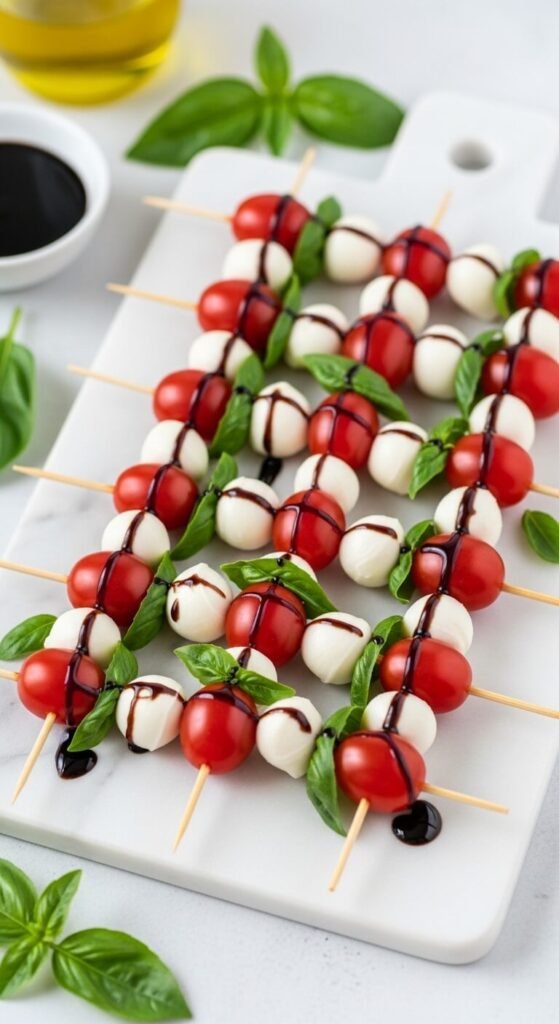
Why Do Tomatoes Slide in the First Place?
Before we fix the problem, let’s understand it. Cherry tomatoes have smooth, waxy skins that don’t grip well against anything—especially smooth mozzarella. Add in a slick basil leaf, and you’ve created the perfect sliding conditions. The skewer itself can also be too thin or too smooth, giving ingredients nothing to “grab” onto.
The good news? Each of these issues has a simple solution.
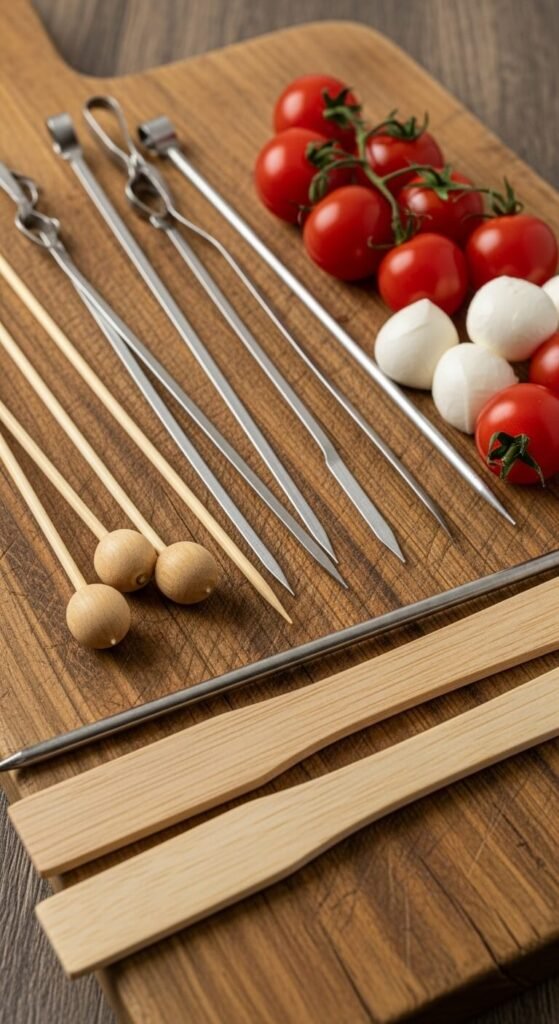
Choose the Right Skewers
Your skewer choice matters more than you think. Not all skewers are created equal when it comes to holding ingredients in place.
Best options:
- Bamboo skewers with texture – The natural grain provides friction
- Slightly thicker skewers (3-4mm) – They fill more space in the tomato hole
- Flat skewers – These prevent spinning and create more surface contact
Avoid: Super-smooth metal skewers or toothpicks that are too thin. They’re pretty, but they’re basically vegetable slides.
The Perfect Assembly Order
Here’s where most people go wrong. The order you thread your ingredients makes all the difference.
The slide-proof sequence:
- Start with a folded basil leaf – This creates a “stopper” at the bottom
- Add the tomato, stem-side down – Pierce through the firmest part
- Thread mozzarella in the center – This is your anchor
- Add another tomato, stem-side up – Creates a mirror effect
- Top with another folded basil leaf – Caps everything off
Why does this work? The basil leaves act like bookends, and threading tomatoes through their stem ends (the firmest part) creates a tighter grip on the skewer.
The Game-Changing Prep Technique
Want to know the real secret? It’s all about creating friction points before you even start assembling.
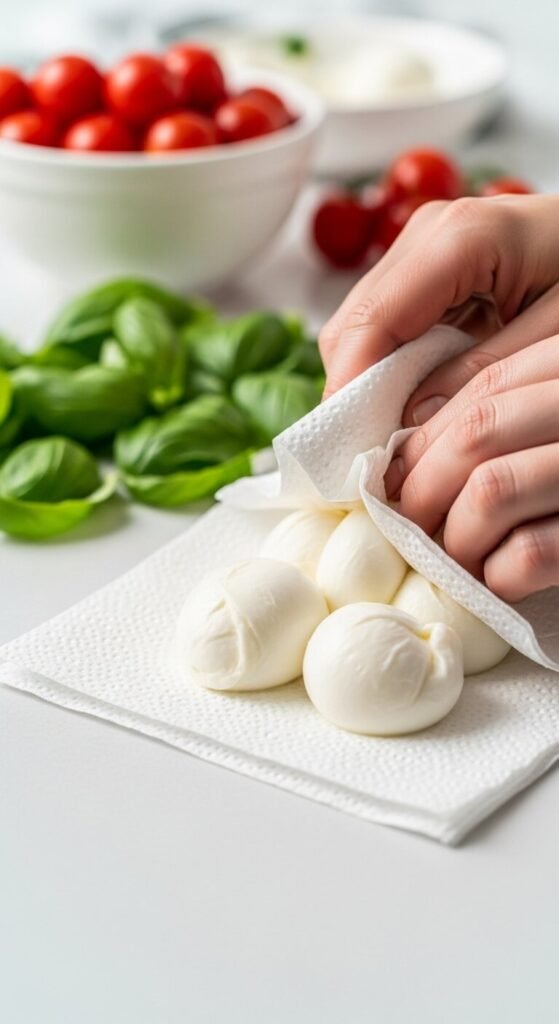
Pat everything completely dry. Use paper towels to remove excess moisture from washed tomatoes, mozzarella (especially if it’s packed in water), and basil leaves. Moisture is the enemy of stability.
Chill your mozzarella. Cold cheese is firmer and grips better than room-temperature mozzarella. Pop it in the fridge for at least 30 minutes before assembling.
Score your tomatoes (optional but effective). Make a tiny X on the top of each tomato with a paring knife. This creates texture for the skewer to grip without compromising the tomato’s structure.
Size Matters: Getting the Proportions Right
If your tomatoes are huge and your mozzarella is tiny, you’re fighting a losing battle. Aim for ingredients that are similar in size—this creates balance and stability.
Ideal sizing:
- Cherry tomatoes: 1 to 1.5 inches in diameter
- Mozzarella balls (ciliegine): Roughly the same size as your tomatoes
- Basil leaves: Medium-sized, folded once or twice
When ingredients are proportional, they nestle together instead of sliding past each other.
The Double-Skewer Method
For extra insurance (especially for outdoor events), try the double-skewer technique. Thread two skewers parallel to each other through each set of ingredients, about half an inch apart. This eliminates any possibility of spinning or sliding and creates an ultra-stable appetizer.
It looks impressive, too—like you really know what you’re doing.
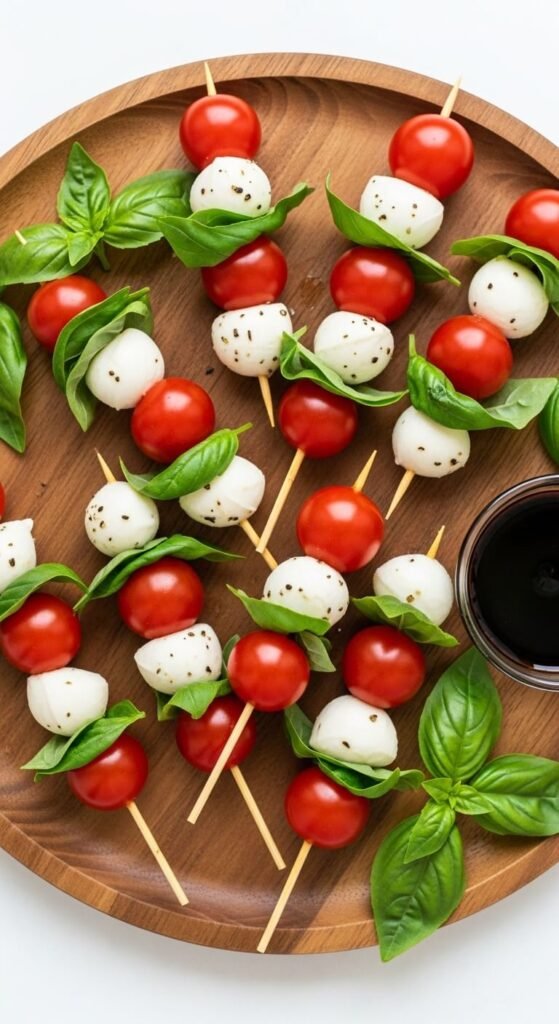
Final Assembly Tips
Once you’ve threaded your skewers, don’t just toss them on a plate. Lay them flat in a single layer on your serving platter until you’re ready to serve. Standing them upright in a container can cause ingredients to shift.
Right before serving:
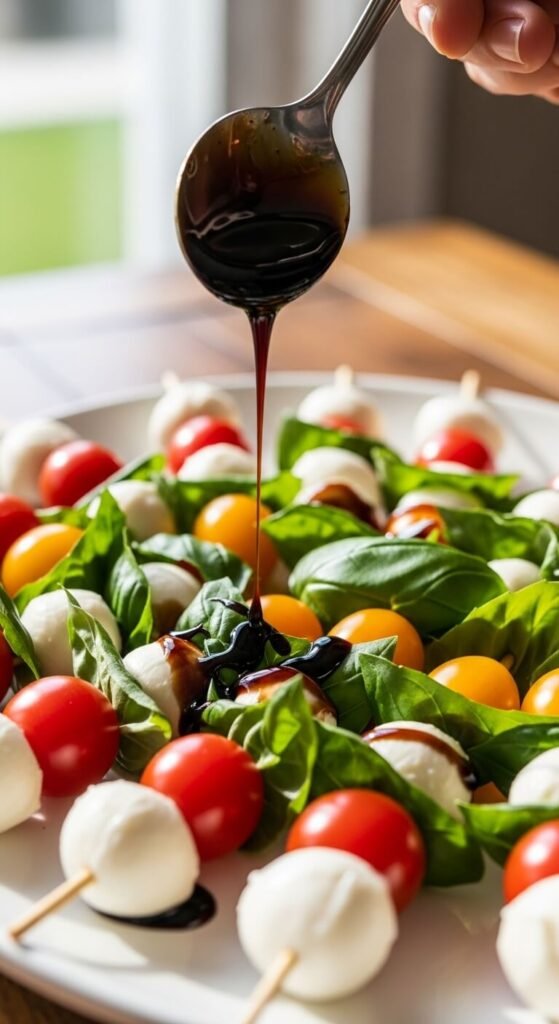
- Drizzle with good quality olive oil and balsamic glaze
- Add a sprinkle of flaky sea salt and cracked black pepper
- Keep them chilled until the last possible moment
Ready to Impress?
With these simple tricks, your Caprese skewers will stay put from kitchen to table to the last bite. No more chasing tomatoes across your serving board or watching your beautiful presentation fall apart. Just stable, stunning, delicious appetizers that taste as good as they look.
Save this guide for your next party, and get ready for everyone to ask: “How did you make these so perfect?” You’ll know the secret—it’s all in the technique.