You know that moment when you’re at your favorite Mexican restaurant, and you can’t stop reaching for the salsa? The perfect balance of spice, tang, and freshness that makes every chip taste like heaven? Here’s the secret they don’t want you to know: you can make even better salsa at home, and it’s easier than you think.
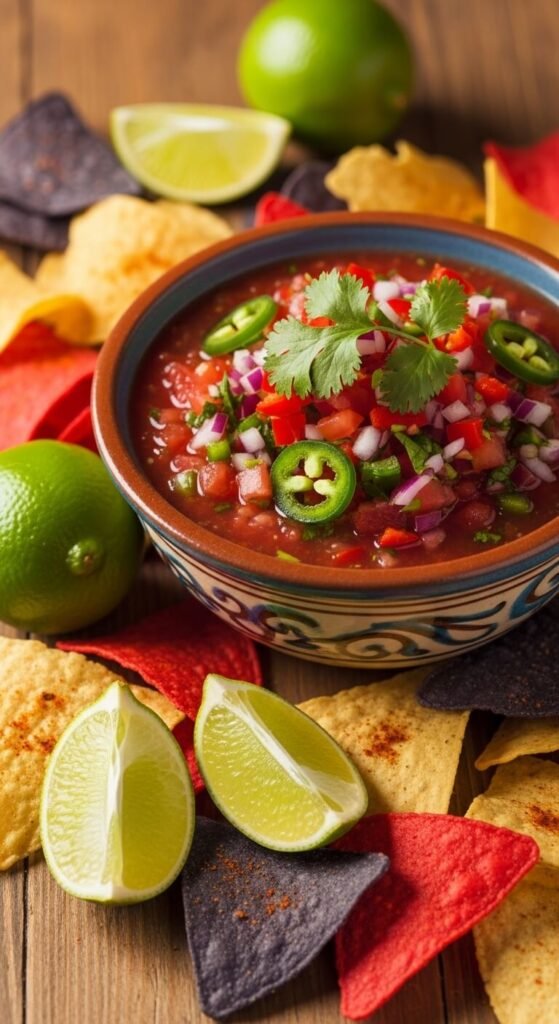
The truth is, most restaurants use shortcuts and preservatives that water down the flavor. But when you make salsa from scratch, you control every ingredient, every spice level, and every burst of flavor. Let’s turn your kitchen into a salsa bar that’ll make your friends beg for the recipe.
The Secret Starts with Fire-Roasted Ingredients
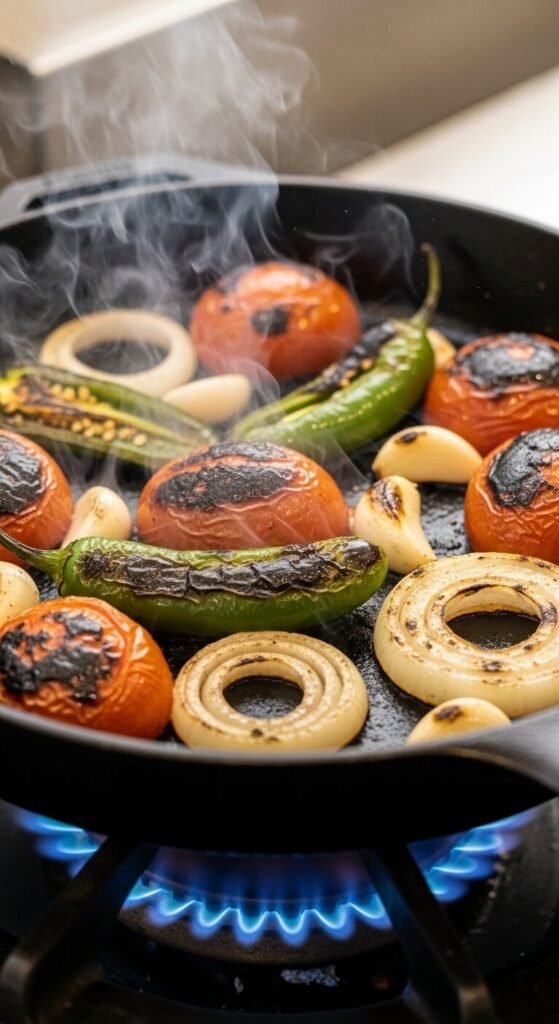
Here’s what separates mediocre salsa from mind-blowing salsa: roasting. While most home cooks just throw raw ingredients into a blender, restaurants (and smart home cooks) know that charring brings out natural sugars and adds a smoky depth that raw ingredients simply can’t match.
What you’ll need to roast:
- 6 medium tomatoes (Roma works best)
- 1 white onion, quartered
- 3-5 jalapeños or serrano peppers
- 4 cloves of garlic, unpeeled
Turn your broiler on high or heat a cast-iron skillet until it’s smoking. Place your tomatoes, onion, and peppers directly on the heat. Let them char until the skins are blackened and blistered—this usually takes 8-10 minutes, turning occasionally. The kitchen will smell amazing, and those char marks are pure flavor gold.
The Ingredient Ratio That Changes Everything
Most homemade salsas fail because of bad proportions. Too much onion? Overpowering. Too little lime? Flat and boring. Here’s the magic formula:
- 6 fire-roasted tomatoes
- 1/4 of the roasted onion (yes, just a quarter!)
- 2-3 roasted peppers (adjust for heat preference)
- 3 garlic cloves
- 1/2 cup fresh cilantro, packed
- Juice of 1 1/2 limes
- 1 teaspoon salt
- 1/2 teaspoon cumin (the secret weapon!)
That small amount of onion is intentional. Most people add way too much, and it dominates the flavor instead of supporting it. Trust the ratio.
The Blending Technique That Makes or Breaks Your Salsa
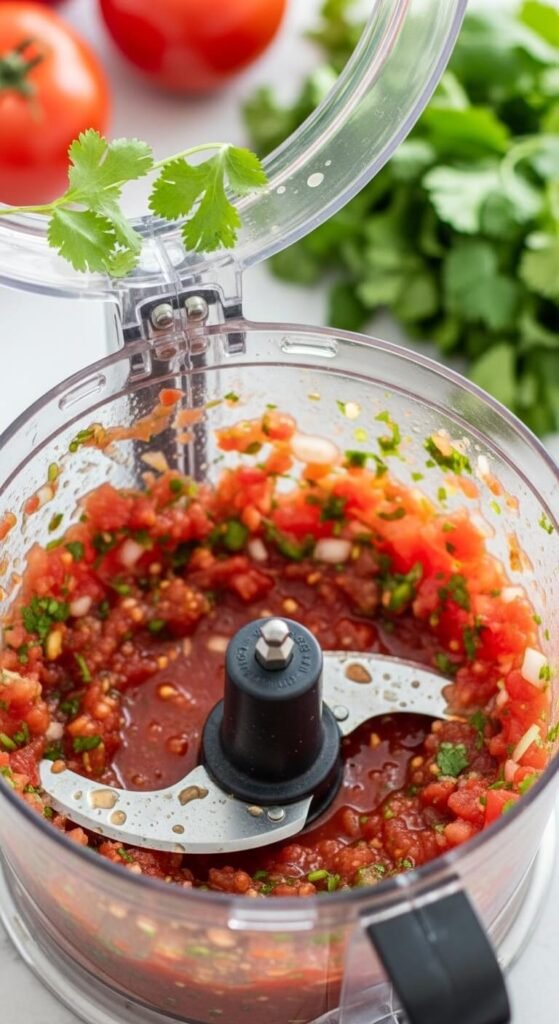
Here’s where most people go wrong: they over-blend. Restaurant salsa has texture—it’s not baby food. You want a chunky, rustic consistency where you can still identify individual ingredients.
The two-pulse method:
First, add your roasted vegetables (let them cool for 5 minutes first), cilantro, lime juice, salt, and cumin to your blender or food processor. Pulse 3-4 times—just quick bursts. You’re looking for a rough chop, not a smoothie.
Check the consistency. If it’s too chunky, give it one or two more pulses. Remember, you can always blend more, but you can’t un-blend.
The Waiting Game (It’s Worth It)
This is the hardest part, but also the most important: patience. Fresh salsa needs time for the flavors to marry and develop. Pour your salsa into a bowl, cover it, and refrigerate for at least one hour—ideally two to three hours.
During this time, the lime juice brightens, the salt draws out moisture, the cumin weaves through everything, and the flavors go from “pretty good” to “where has this been all my life?”
Level-Up Tips from the Pros
Want to take your salsa from great to legendary? Try these restaurant secrets:
- Add a pinch of sugar if your tomatoes are too acidic
- Char one extra jalapeño and add it for a smokier kick
- Use Mexican oregano instead of regular (it’s earthier and more complex)
- Mix in 1/4 cup finely diced raw onion after blending for textural contrast
- Adjust salt after refrigeration—flavors dull when cold, so you may need a bit more
Storing Your Homemade Masterpiece
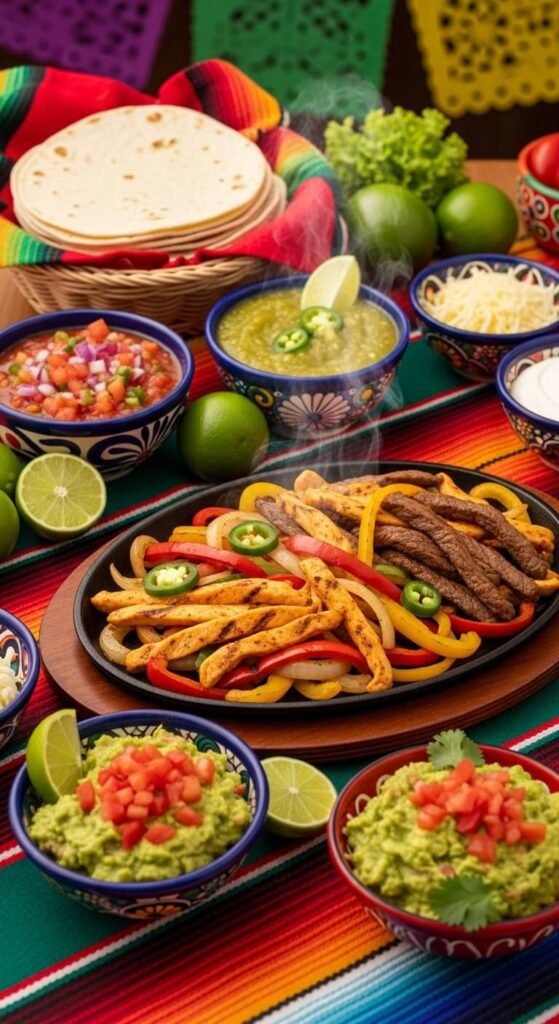
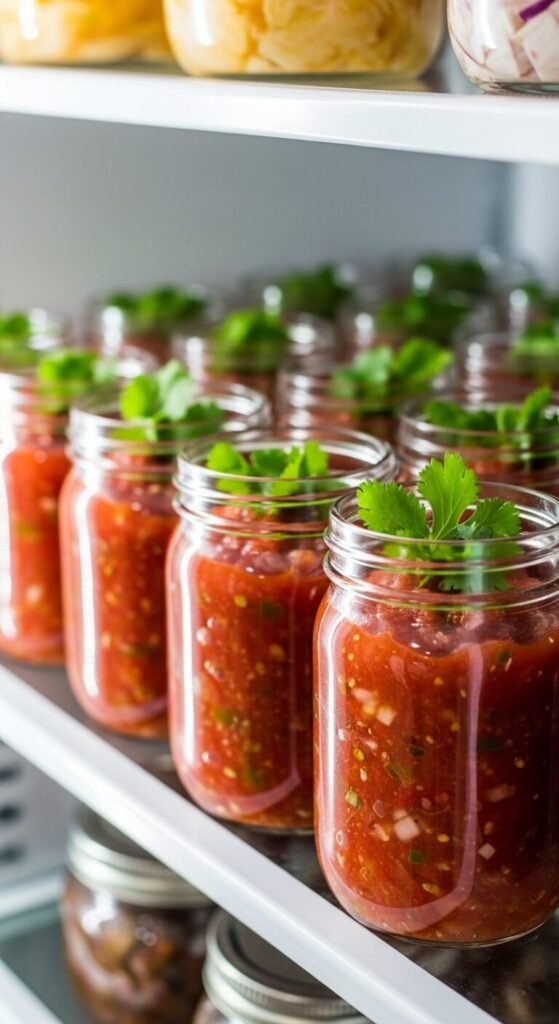
Your salsa will stay fresh in an airtight container in the fridge for 4-5 days (though it rarely lasts that long). The flavor actually improves on day two, so making it ahead for taco Tuesday? Genius move.
For longer storage, freeze it in ice cube trays, then transfer the cubes to a freezer bag. Pop out a few cubes whenever you need fresh salsa—it’ll keep for up to three months.
Your New Go-To Recipe
Once you master this technique, you’ll never look at restaurant salsa the same way. The fire-roasting adds depth, the perfect ratios create balance, and the resting time develops complexity that jarred salsa could never match.
The best part? You can customize everything. Love it spicy? Add more serranos. Prefer it mild? Use poblanos instead. Want it smokier? Add a chipotle pepper. This is your salsa empire now.
Save this recipe for later! Screenshot it, pin it, or bookmark this page. Trust me, once you serve this at your next gathering, everyone will be asking how you made “restaurant-quality” salsa. Just smile and enjoy being the salsa champion you were always meant to be.
Word count: 892 words