Picture this: you set out a gorgeous bread bowl filled with creamy spinach dip at your party — and twenty minutes later, there’s a soggy puddle on the platter and a very sad, collapsed loaf. We’ve all been there. The good news? A leak-proof bread bowl is 100% achievable, and it comes down to just a few simple tricks most people skip. Whether you’re hosting game night or a holiday gathering, this guide will walk you through making a bread bowl that holds up all evening long.
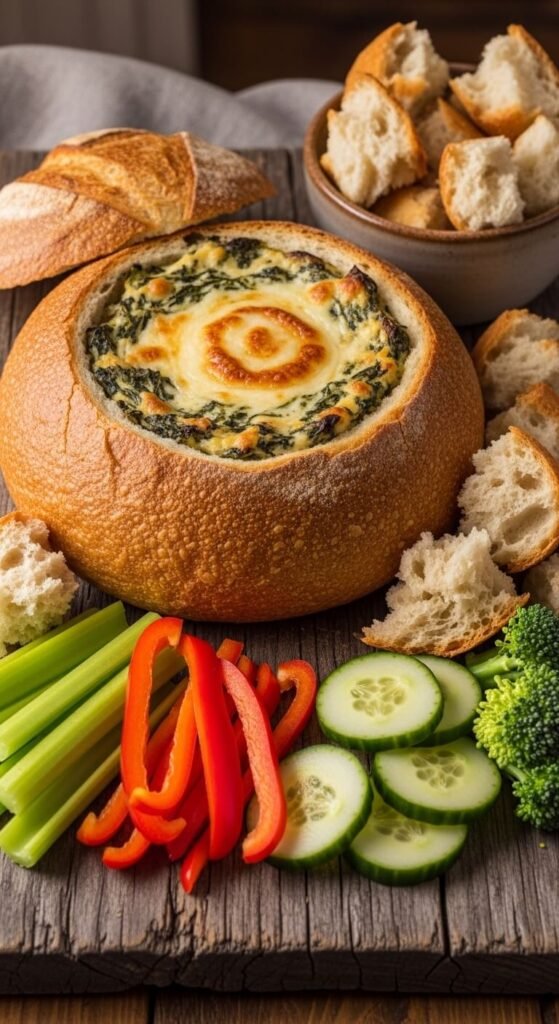
Choose the Right Bread (This Step is Non-Negotiable)
Not all bread is created equal when it comes to bowl duty. You need a loaf that’s dense, thick-crusted, and sturdy — otherwise the dip will eat right through it.
Best breads for a dip bowl:
- Sourdough round (the gold standard — naturally tangy and thick-walled)
- Pumpernickel boule
- Crusty Italian or French round loaf
- Whole wheat boule
Avoid at all costs:
- Soft sandwich loaves
- Ciabatta (too many air pockets)
- Any bread with a thin or papery crust
The thicker the crust, the better your barrier against moisture. A day-old loaf actually works better than fresh — slightly dried-out bread absorbs less liquid.
How to Cut and Hollow It Out the Right Way
This is where most bread bowls go wrong. People dig too deep, leaving walls that are paper-thin and destined to collapse.
Here’s the right technique:
- Using a sharp serrated knife, cut a circle on the top of the loaf at a slight inward angle (like cutting a jack-o’-lantern lid). The opening should be about 4–5 inches wide.
- Lift the lid off and set it aside — you’ll use it for dipping later.
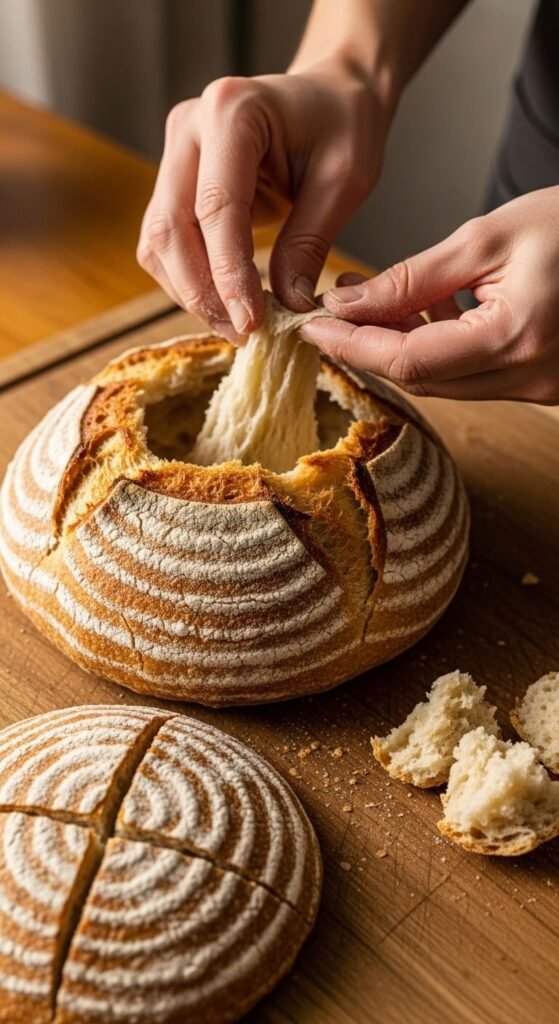
- Use your fingers or a spoon to pull out the soft bread interior, leaving at least ¾ to 1 inch of bread on all sides and the bottom.
- Don’t rush this step. Thicker walls = a sturdier bowl.
The Secret Step: Sealing the Inside
Here’s the game-changing trick that most recipes don’t mention — seal the inside of the bread bowl before adding your dip.
There are two great ways to do this:
Option 1 – Toast it in the oven:
- Preheat your oven to 350°F (175°C).
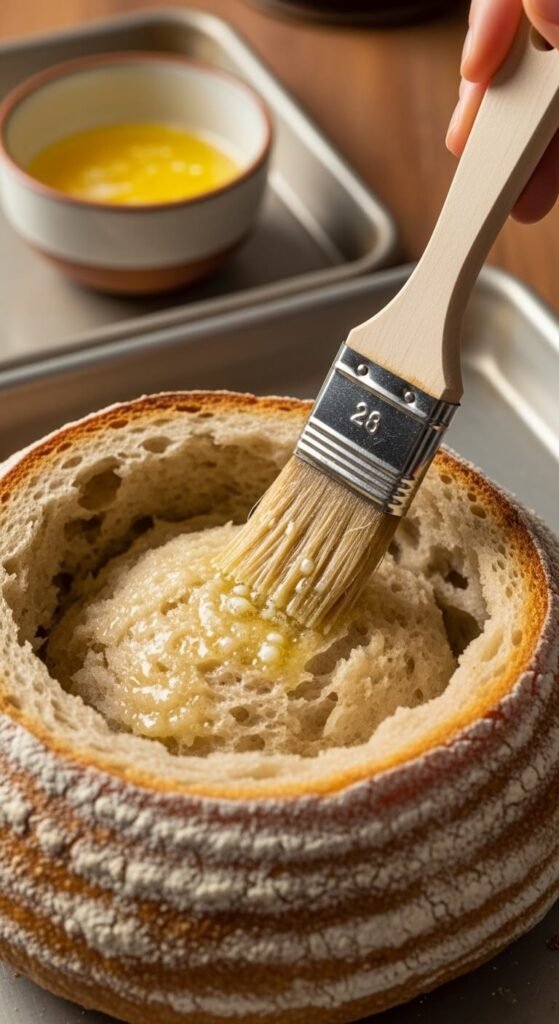
- Brush the inside of the hollowed loaf with melted butter or olive oil.
- Place it on a baking sheet and bake for 10–12 minutes, until the interior walls feel dry and slightly crispy.
- This creates a toasted barrier that slows moisture absorption dramatically.
Option 2 – The cream cheese seal:
- Spread a thin layer of softened cream cheese along the inside walls and bottom of the bread bowl before filling.
- It acts like edible waterproofing and adds a bonus flavor layer.
Either method works beautifully. For extra insurance? Do both.
Filling It Without Overflow
Even with sealed walls, filling technique matters. Follow these tips:
- Let hot dips cool slightly before pouring into the bread bowl — steam from very hot dip accelerates sogginess.
- Fill it no more than ¾ full to avoid spills when guests dig in.
- Add a liner for ultra-wet dips: For something like a cheese fondue or very thin dip, press a small piece of plastic wrap or parchment loosely into the bowl before filling. Remove it at the table if you’d prefer the rustic look.
- Serve the bread bowl on a flat board or rimmed platter to catch any inevitable drips.
Serving Tips That Make It Look (and Stay) Beautiful
Presentation matters just as much as function. Here’s how to make your bread bowl the star of the table:
- Arrange the torn bread pieces around the bowl in a casual, scattered way — it looks effortless and inviting.
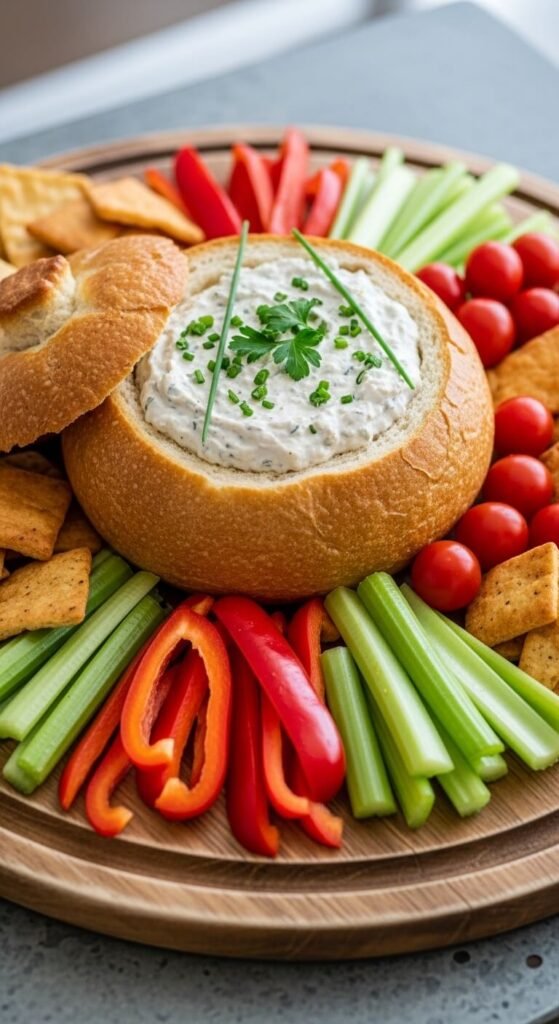
- Add colorful dippers like bell pepper strips, celery, carrots, or pita chips to build height and color contrast around the bowl.
- Garnish the top of the dip with fresh herbs, a drizzle of olive oil, or a sprinkle of paprika right before guests arrive.
Best Dips for a Bread Bowl
Some dips work better than others when it comes to structure. Here are tried-and-true favorites:
- Spinach artichoke dip (classic for good reason)
- Broccoli cheddar dip
- Buffalo chicken dip
- French onion dip
- Baked brie-style dip
Thicker, creamier dips are always a safer bet than thin, brothy ones — they’re less likely to seep into the walls quickly.
Your Bread Bowl Is Ready to Shine
A leak-proof bread bowl isn’t complicated — it just takes the right loaf, the right wall thickness, and that one extra step of sealing the inside. Master these basics and you’ll never deal with a sad, soggy bread bowl again.
Save this article for your next party, and tag a friend who needs this tip! 🍞✨