You’ve done everything right — marinated your chicken, chopped your veggies into perfect chunks, and fired up the grill. Then it happens. Your carefully threaded peppers spin uselessly. Your shrimp slides to one end. Your zucchini falls right into the flames. Sound familiar?
Making beautiful, evenly cooked skewers isn’t just about flavor — it’s about control. And once you know a handful of simple tricks, you’ll never wrestle with a wobbly skewer again.
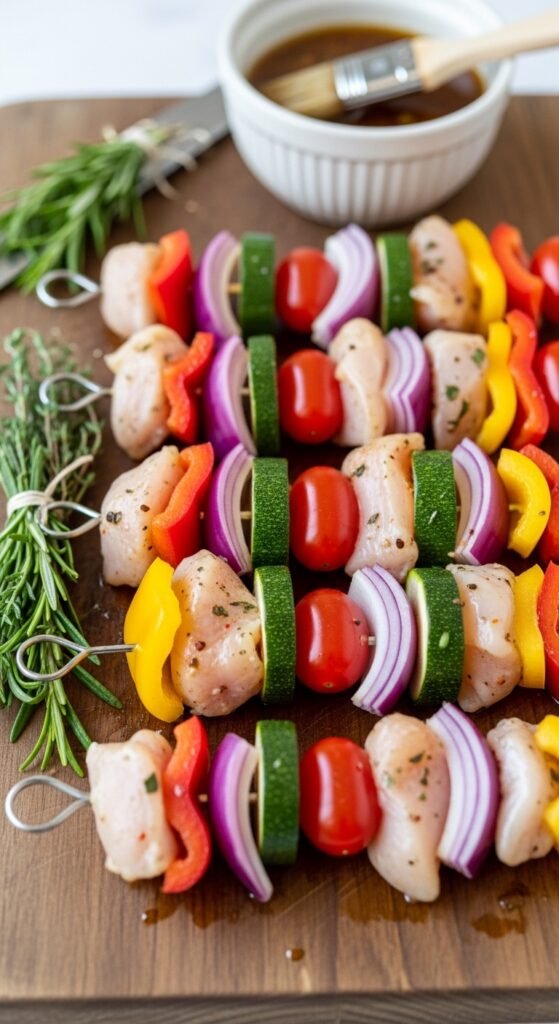
Choose the Right Skewer for the Job
Not all skewers are created equal, and your choice of skewer is the foundation of everything.
- Flat metal skewers are the gold standard for preventing rotation. Their wide, blade-like shape grips ingredients so nothing spins when you turn them on the grill.
- Double-pronged skewers are another game-changer — two parallel prongs hold everything firmly in place, like a tiny pitchfork.
- Bamboo skewers work well, but always soak them in water for at least 30 minutes before use. This prevents burning and makes the surface slightly rougher, giving ingredients more friction to grip onto.
If you’re using round wooden skewers and nothing else is available, try threading two skewers side by side through each ingredient — instant stability upgrade.
Cut Ingredients to the Right Size and Shape
This is where most people quietly go wrong. Ingredient shape matters a lot.
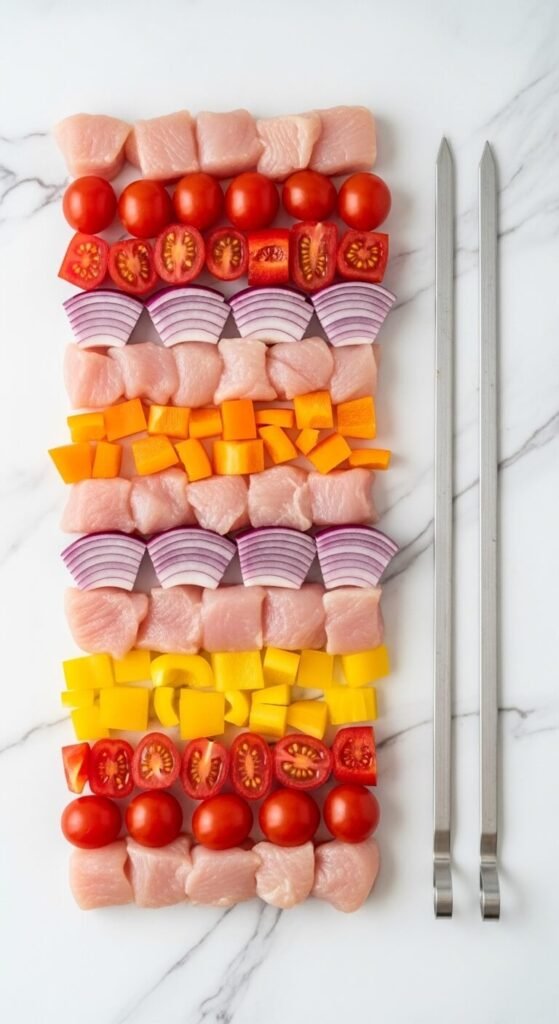
Here’s what to keep in mind:
- Uniform sizing ensures even cooking and reduces the weight imbalance that causes sliding.
- Thick, flat cuts (like folded bacon, halved mushrooms, or thick onion layers) lie flush against the skewer and resist turning.
- Avoid round or smooth surfaces on their own — cherry tomatoes and whole olives are notorious spinners. If you use them, sandwich them tightly between chunkier pieces.
- For proteins like shrimp or chicken strips, thread in an “S” shape — weaving the skewer through the ingredient at multiple points locks it in place.
Master the Threading Technique
Even with the best skewer and perfectly cut ingredients, poor threading technique will undo all your hard work.
- Thread ingredients snugly but not too tightly — leave just a little breathing room so heat can circulate, but not so much that pieces flop around.
- Alternate soft and firm ingredients. A chunk of bell pepper on either side of a softer piece of onion acts like bookends, keeping everything upright.
- Push ingredients all the way to the center of the skewer, leaving about an inch of space at each end for handling.
- For meats, always thread with the grain of the muscle fibers. This keeps the protein from tearing or collapsing off the skewer mid-cook.
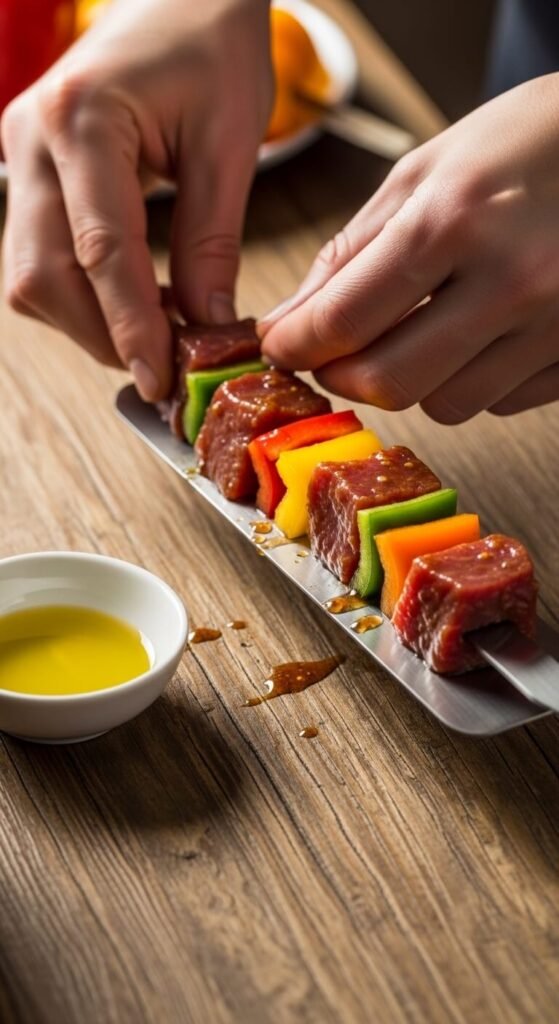
Use a Marinade That Helps, Not Hurts
Wet, dripping marinades can make ingredients slippery — literally greasing the skewer and helping things slide right off.
- Pat proteins dry before threading, even if they’ve been marinating. A quick press with paper towels removes excess liquid.
- Use thicker marinades (think yogurt-based, pesto, or paste-style rubs) that cling to the surface rather than drip off it.
- If you’re using an oil-heavy marinade, add a brush of oil directly on the grill grate instead of soaking the ingredient — you’ll still get that gorgeous char without the slippage.
Rest the Skewers Before Grilling
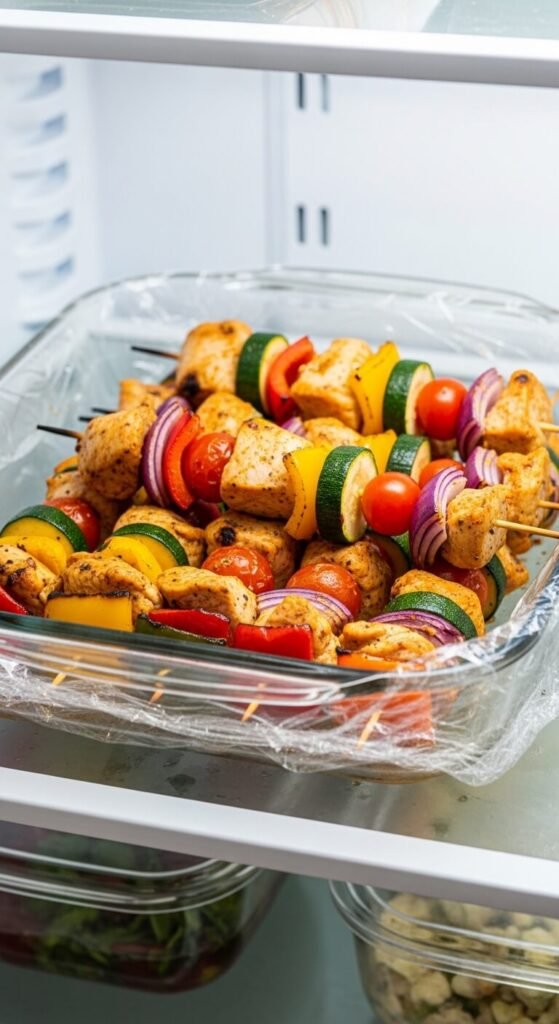
One underrated tip: once your skewers are assembled, let them rest in the fridge for 10–15 minutes before they hit the heat. This firms up the proteins, helps marinades set slightly, and gives everything a chance to “settle” onto the skewer.
Grill Them Like a Pro
- Use medium-high heat and resist the urge to constantly move the skewers — let them develop a sear before turning.
- Turn skewers only a quarter at a time rather than flipping them completely. This keeps gravity working in your favor.
- Use tongs, not a fork, to turn — a fork can pierce and loosen ingredients from the skewer.
The Takeaway
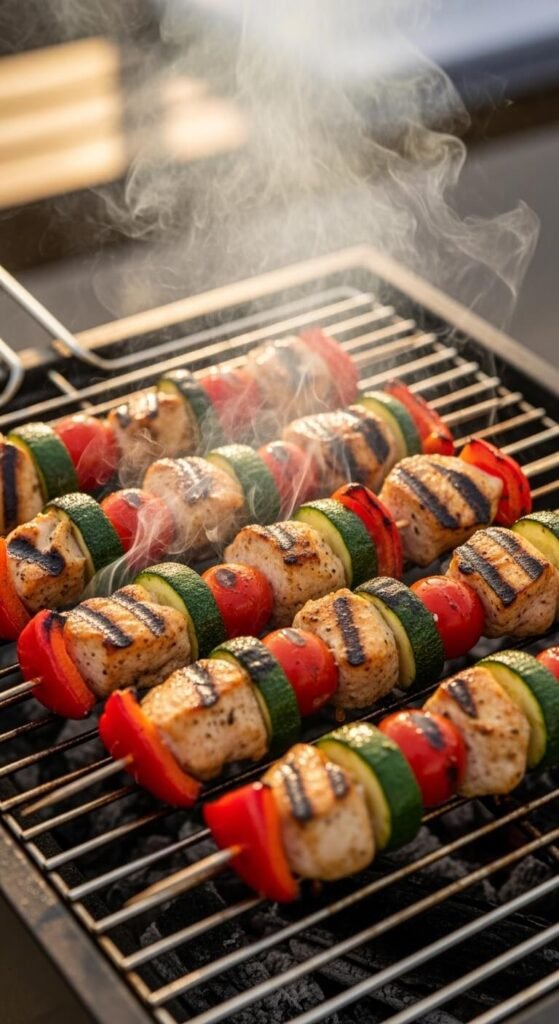
Perfect skewers come down to three things: the right tools, smart prep, and a little patience. Once you switch to flat skewers, cut uniformly, and thread thoughtfully, you’ll wonder why you ever struggled in the first place.
Save this guide for your next cookout — and share it with the friend who always loses their shrimp to the flames. 🔥