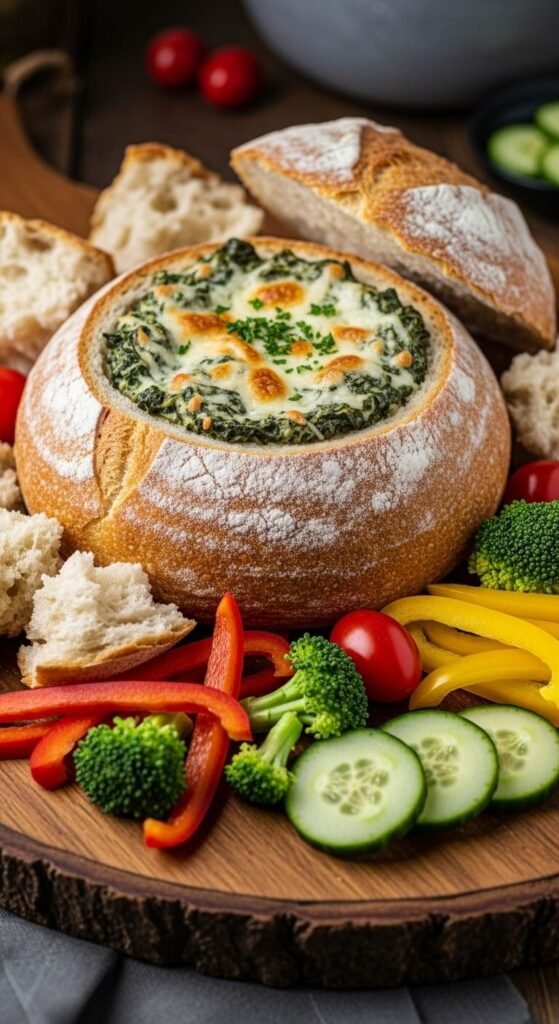
You’ve seen it at every party — that gorgeous, golden bread bowl filled with creamy spinach dip, sitting proudly at the center of the table. And then someone scoops too deep, the bottom gives way, and suddenly there’s dip everywhere except where it should be. Sound familiar? The good news: a leaky bread bowl is completely avoidable. With the right technique, you can build a bread bowl that holds up through the whole party — no puddles, no soggy disasters, just beautiful, dippable perfection.
Choosing the Right Bread
Not all bread is created equal when it comes to bowl duty. You need something with structure — a thick, sturdy crust and a dense, chewy interior.
Best breads for a dip bowl:
- Sourdough – The gold standard. Thick crust, tangy flavor, holds its shape beautifully.
- Round rye loaf – Dense and hearty, great with savory dips.
- Pumpernickel – Earthy and extra firm; pairs perfectly with cream cheese dips.
- Artisan boule – Any round, crusty artisan loaf from a bakery will work well.
Avoid: Soft sandwich bread, brioche, or anything labeled “light” or “fluffy.” These will absorb moisture and collapse under the weight of your dip.
The Secret: Hollowing It Out Correctly
This is where most people go wrong. They scoop too much, leave the walls too thin, or cut all the way through the bottom. Here’s how to do it right.
Step-by-step hollowing:
- Use a sharp serrated knife to cut a circle around the top of the loaf — think of it like carving a pumpkin. Cut at a slight inward angle so the “lid” doesn’t fall in.
- Pull the top off and set it aside (you’ll use it for dipping later).
- Hollow out the interior using your hands, leaving at least ¾ to 1 inch of bread on all sides and the bottom. This is your leak barrier.
- Don’t go too close to the crust — the crust is your structural wall.
[Image Prompt] Hands hollowing out the inside of a round sourdough loaf on a wooden cutting board, with torn bread pieces scattered nearby and a serrated knife resting beside it.
The Game-Changer: Sealing the Inside
Here’s the tip that separates a good bread bowl from a great one — seal the interior before adding your dip.
How to seal it:
- Toast it in the oven: Place the hollowed bread bowl on a baking sheet and bake at 350°F (175°C) for 8–10 minutes. This dries out the inner surface and creates a slight crust on the inside, dramatically reducing absorption.
- Brush with olive oil or melted butter: After toasting, lightly brush the inside walls and bottom with olive oil or butter. This adds a moisture-resistant layer between the bread and your dip.
- Optional: Add a thin layer of melted cheese right on the interior — bake until just set. This acts almost like a waterproof liner and adds flavor.
Even 10 minutes in the oven makes an enormous difference. Don’t skip this step.
[Image Prompt] A hollowed sourdough bread bowl being brushed with golden melted butter on the inside, sitting on a parchment-lined baking sheet under warm kitchen lighting.
Choosing and Adding Your Dip
Thicker dips work best in bread bowls. Runny dips are harder to control and put more pressure on your seal.
Great dip options:
- Spinach artichoke dip
- Buffalo chicken dip
- Baked brie with jam
- French onion dip
- Crab dip
Tips for filling:
- Let hot dips cool slightly before pouring — extreme heat can soften the bread faster.
- Fill the bowl no more than ¾ full to avoid overflow when people dip.
- If serving a cold dip, chill it first so it’s thick before it goes in.
Serving It Like a Pro
Presentation matters! Place your filled bread bowl on a large wooden board or platter. Arrange the torn-out bread chunks around the bowl, and add dipping extras like crackers, celery sticks, baby carrots, and sliced baguette.
[Image Prompt] An overhead flat-lay of a filled bread bowl dip surrounded by crackers, carrot sticks, celery, and torn sourdough pieces arranged artfully on a large slate serving board.
The lid you cut off earlier? Slice it into triangles and serve alongside — it’s the best piece for scooping.
Quick Recap: No-Leak Bread Bowl Checklist
- ✅ Use a dense, crusty loaf (sourdough is best)
- ✅ Leave at least ¾ inch on walls and bottom
- ✅ Toast the hollow bowl for 8–10 minutes before filling
- ✅ Brush inside with butter or olive oil
- ✅ Use a thick dip, filled ¾ of the way
- ✅ Serve immediately for best results
A bread bowl that holds together is honestly one of those little party wins that people remember. It looks impressive, it’s delicious, and now you know exactly how to make it work every single time.
Save this article for your next gathering — and tag a friend who needs to see the sealing trick! 🍞