You pull the basket out of the hot oil, and there they are — sad, burst wonton pockets leaking cream cheese into the fryer like little edible volcanoes. If this has happened to you, you’re not alone. Crab Rangoon is one of those appetizers that looks simple but has a few sneaky pitfalls that cause the whole thing to fall apart — literally. The good news? Once you know the tricks, you’ll be folding perfect, crispy, golden pockets every single time.
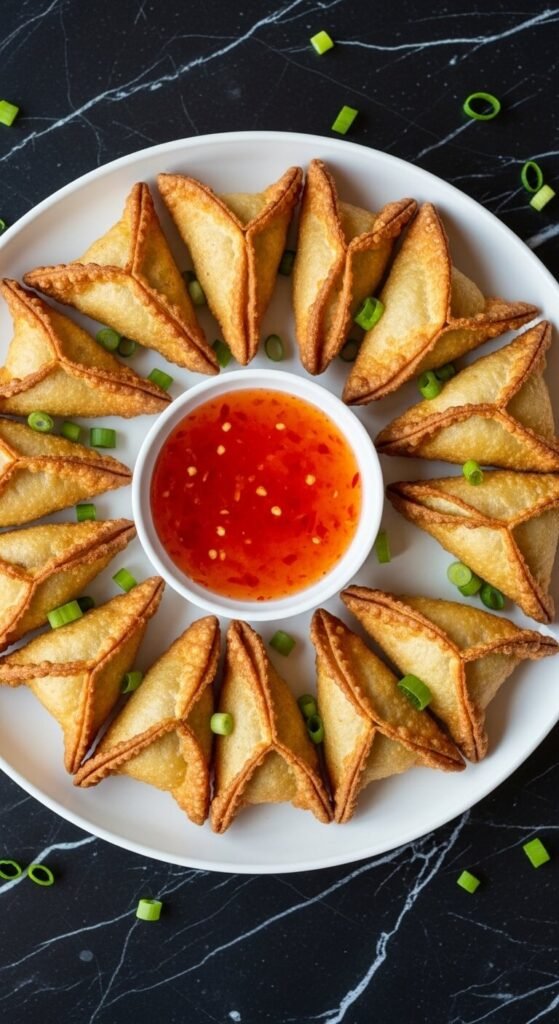
Why Crab Rangoon Explodes in the First Place
Before fixing the problem, it helps to understand it. There are three main culprits:
- Trapped air inside the fold. If air is sealed inside the wonton wrapper, it expands when it hits hot oil and — boom. Instant blowout.
- Overfilling. More filling doesn’t always mean more delicious. It means more pressure building up during frying.
- Loose or wet seals. If the edges aren’t sealed properly, the filling seeps out and the wrapper opens up in the oil.
That’s it. Fix those three things, and you’ve solved the problem entirely.
The Filling: Keep It Simple and Cold
The classic crab rangoon filling is a combination of cream cheese, imitation crab (or real crab), green onions, and a few simple seasonings. Here’s what matters most:
- Use full-fat block cream cheese, softened to room temperature. This blends smoothly without lumps.
- Don’t over-season. A little garlic powder, a splash of Worcestershire, a pinch of salt — that’s all you need.
- Chill the filling for at least 30 minutes before assembling. Cold filling is firmer, stays in place better, and is much easier to work with.
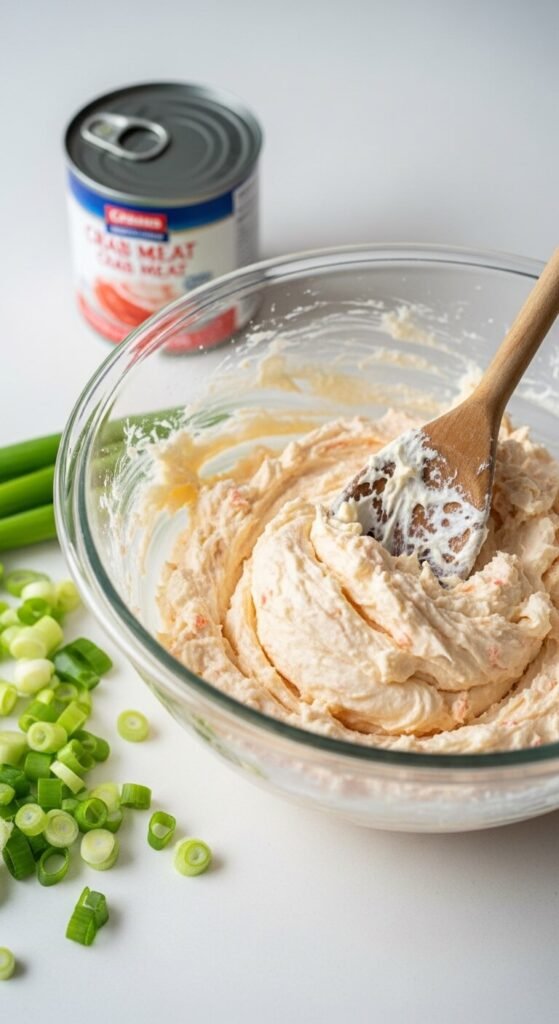
A good ratio: 8 oz cream cheese to about ½ cup crab, finely shredded. That keeps the filling cohesive rather than chunky, which helps with sealing.
The Fold: The Most Important Step
This is where most people go wrong. There are a few different ways to fold crab rangoon — the triangle fold, the star fold, the classic purse — but they all share one golden rule:
Get the air out before you seal.
Here’s the method that works best:
- Place a wonton wrapper flat on a clean surface (a damp paper towel underneath keeps it from sliding).
- Add one teaspoon of filling to the center — no more.
- Dab all four edges with a little water using your fingertip.
- Bring two opposite corners together and press out the air from the center toward the edges before fully pinching.
- Seal firmly — really press those edges together. No gaps, no air pockets.
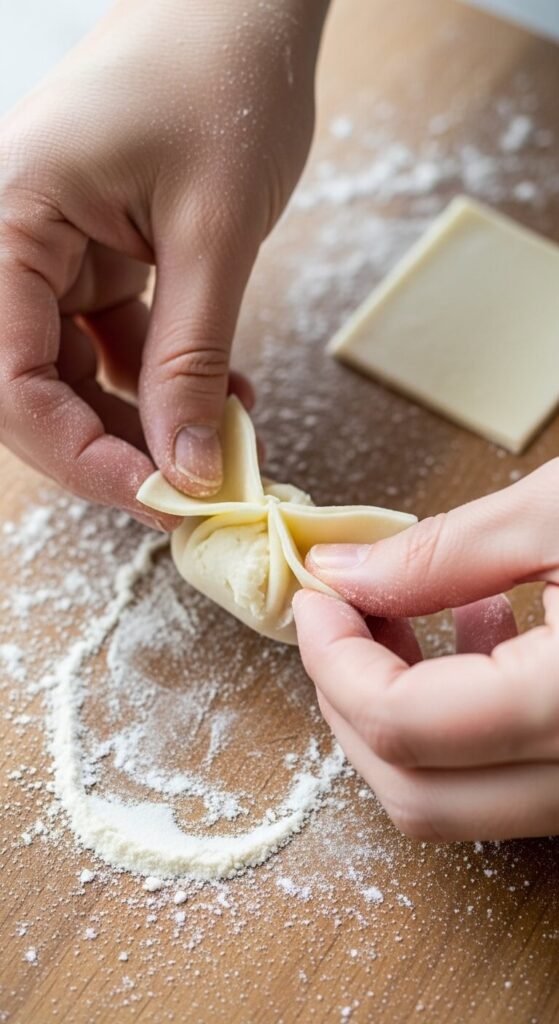
The purse fold (bringing all four corners up to meet in the middle) is especially forgiving for beginners because it gives you more surface area to seal.
Frying: Temperature Is Everything
Even a perfectly assembled crab rangoon will explode if the oil isn’t hot enough — or is too hot.
- Ideal oil temperature: 350°F (175°C). Use a thermometer. Guessing doesn’t work here.
- Too cold? The wonton absorbs oil and gets greasy before the seal can set.
- Too hot? The outside browns too fast and the steam inside has nowhere to go — hello, explosion.
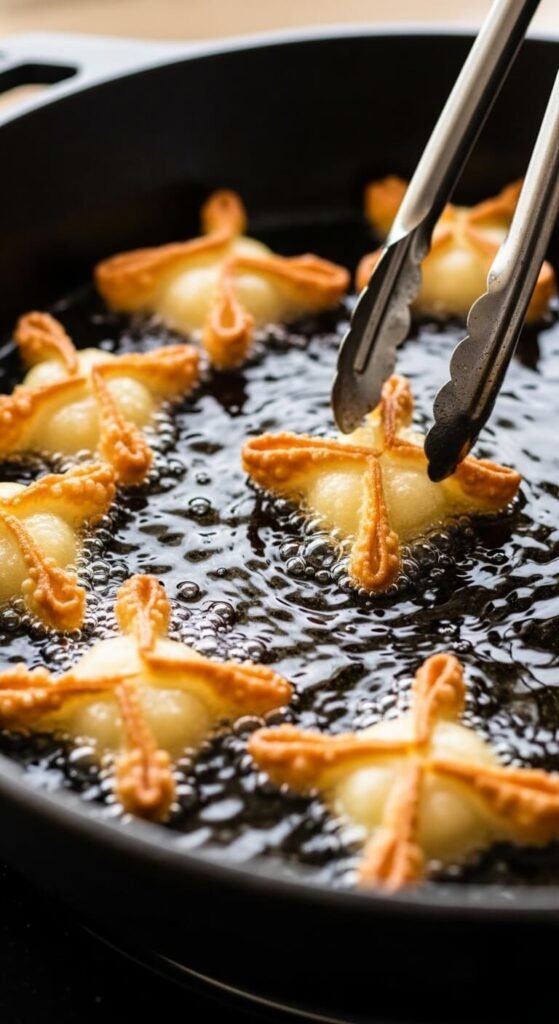
Fry in small batches — no more than 4 to 6 at a time. Crowding the oil drops the temperature fast.
Fry for 2 to 3 minutes, turning once, until they’re a deep golden-amber color. Drain on a wire rack, not paper towels, so the bottoms stay crispy.
A Few Extra Tips Worth Knowing
- Don’t skip the water seal. Egg wash works too, but plain water is just as effective and easier.
- Keep assembled rangoon covered with a damp cloth while you work — dry wrappers crack and won’t seal properly.
- Freeze before frying if you’re making a big batch. Frozen crab rangoon actually holds together better in the oil. Fry straight from frozen for about 4 minutes.
The Payoff
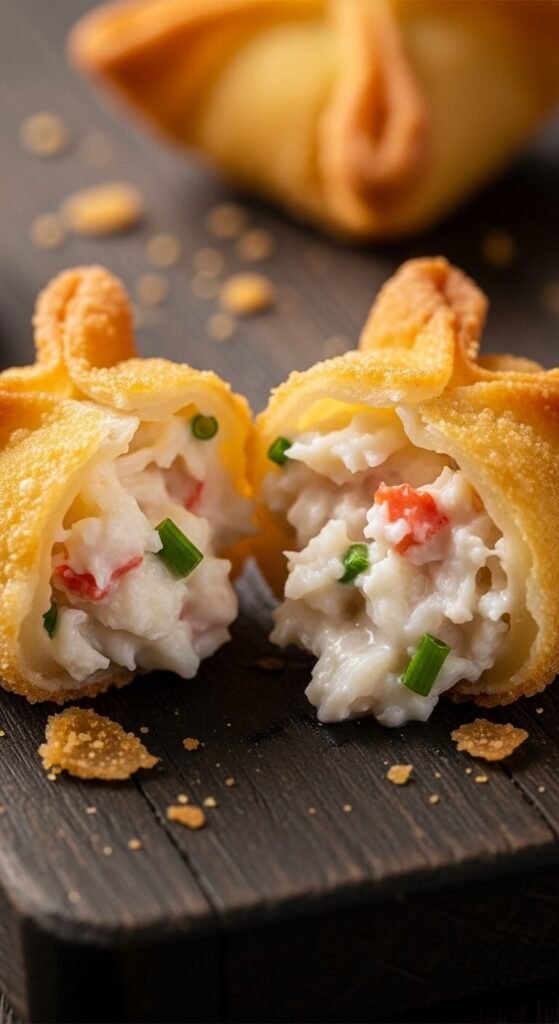
When you do it right — cold filling, no air, tight seal, hot oil — you get this: a shatteringly crispy exterior that gives way to a warm, creamy, savory center. It’s everything a crab rangoon should be, and nothing ends up floating loose in your fryer.
Save this guide for your next appetizer night — and tag a friend who’s lost one too many rangoon to the fryer gods. 🦀